
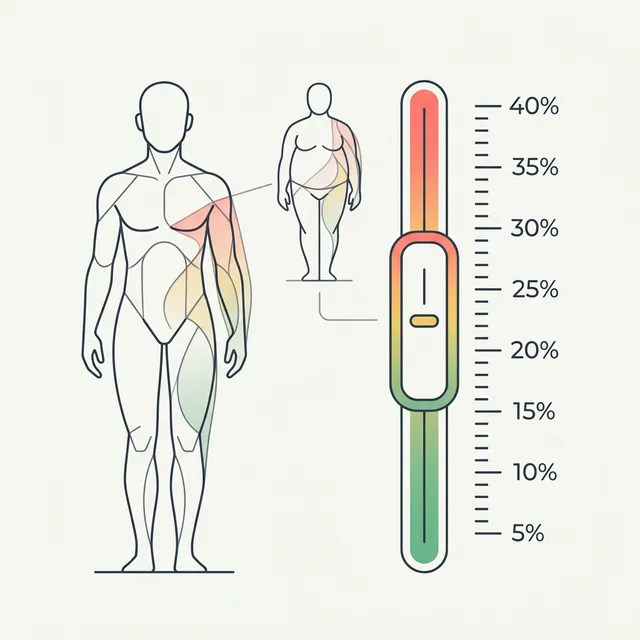
Quick answer: A visible jawline has no universal body-fat percentage target. Facial structure, individual fat distribution and photo conditions all affect its appearance. A face photo cannot establish your exact body-fat percentage. Compare standardized photos over time alongside other progress measures, without treating a sharper jaw as a required health goal.
You've compared two photos taken a month apart. Your arms look different, but your jaw looks almost the same. Changing the light suddenly makes it look sharper. Which image should you trust?
A jawline is a difficult progress marker because several things shape what you see. Body fat can influence facial fullness, while bone structure and the camera affect the outline too. A fixed percentage target cannot separate those effects.
For a rough starting point, the AI body fat estimator from a photo reads a clear front-facing body photo. It cannot measure face fat or predict when your jawline will change.
What body fat percentage reveals your jawline?
There is no universal threshold. Two men with similar body-fat estimates can have visibly different jaws, cheeks and neck contours. A sharp jaw also cannot tell you that someone is at a particular percentage.
Research on facial morphology and body composition found associations between facial measurements and measures such as weight and BMI. Those group-level associations do not provide an individual jawline target or validate reading an exact percentage from a selfie.
| What you observe | What it can tell you | What it cannot establish |
|---|---|---|
| A sharper outline across comparable photos | Your visible contour may have changed | An exact body-fat percentage |
| A softer jaw with visible abs | Different body regions can look different | How many more pounds you should lose |
| A dramatic change under overhead light | Lighting changes shadows and apparent definition | A change in facial fat |
| Similar body-fat estimates on two people | The estimates happen to be close | Matching facial structure or appearance |
The 12% and 15% body fat reference pages illustrate whole-body appearance. They are illustrative references, and their labels should never be used as jawline targets.
How does face shape affect jawline appearance?
Face-shape labels are broad descriptions. They cannot prescribe how lean you should become. These four common labels describe different outlines without assigning a fat-loss target:
Rounded cheeks or a curved outline may remain part of your appearance as your body composition changes. The label alone cannot distinguish structure from fat.
A longer outline with a rounded chin can look different from the front and side. There is no percentage at which it must become angular.
The underlying jaw shape may create a distinct outline across different body compositions. A visible corner does not identify a low body-fat percentage.
Length and camera perspective influence the visible proportions. Pursuing a lower body-fat estimate cannot guarantee a particular balance between cheeks, chin and jaw.
Why can your face look different from the rest of your body?
Facial appearance reflects the soft tissue around an individual skeleton. A study of facial soft-tissue depth examined variation with sex, age and BMI, illustrating why body size alone is an incomplete description.
Photo conditions add another source of variation. Turning your head, raising your chin or moving the light changes the shadows around your jaw. A close phone camera can also change apparent proportions. None of these differences measures a change in fat.
Use facial photos as one visual record alongside your broader progress. They cannot establish your health or decide whether more weight loss is appropriate.
How can you compare jawline progress more consistently?
Choose conditions you can repeat before interpreting a difference:
- Fix the camera position. Use the same camera, lens, distance and height.
- Repeat the light and pose. Use even lighting, a relaxed expression and a neutral head position. Capture the same front and side views.
- Compare spaced-out dates. Review photos several weeks apart rather than searching for daily changes.
- Use several progress measures. Consider body-weight trends, consistent tape measurements, training performance and how you feel alongside the photos.
Body-fat methods also have uncertainty. A scan, impedance scale, circumference formula or photo estimate can give different results. Use consistent measurement conditions and avoid treating a small change in an estimate as proof of facial fat loss.
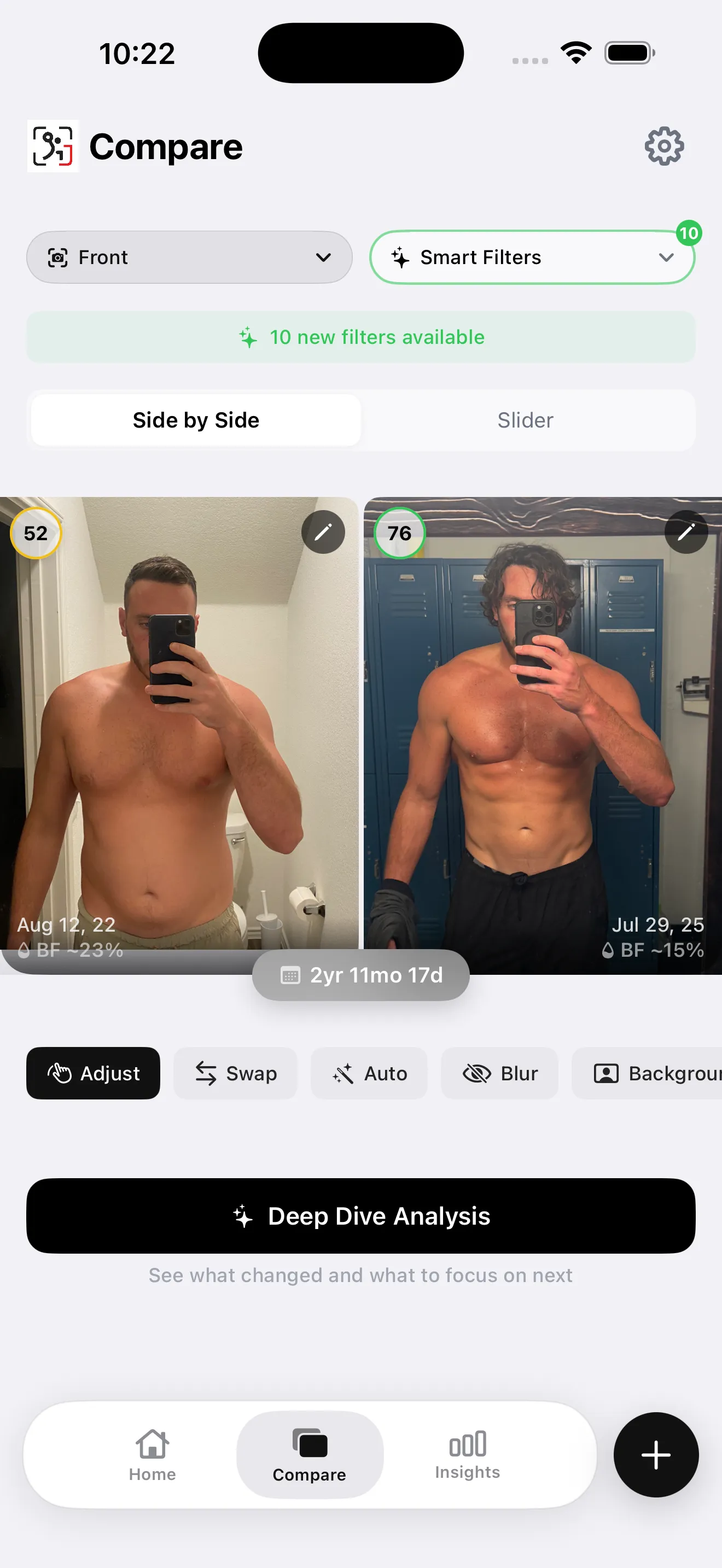
A comparison view makes matching the angle and lighting easier to check. Visible differences still need context.
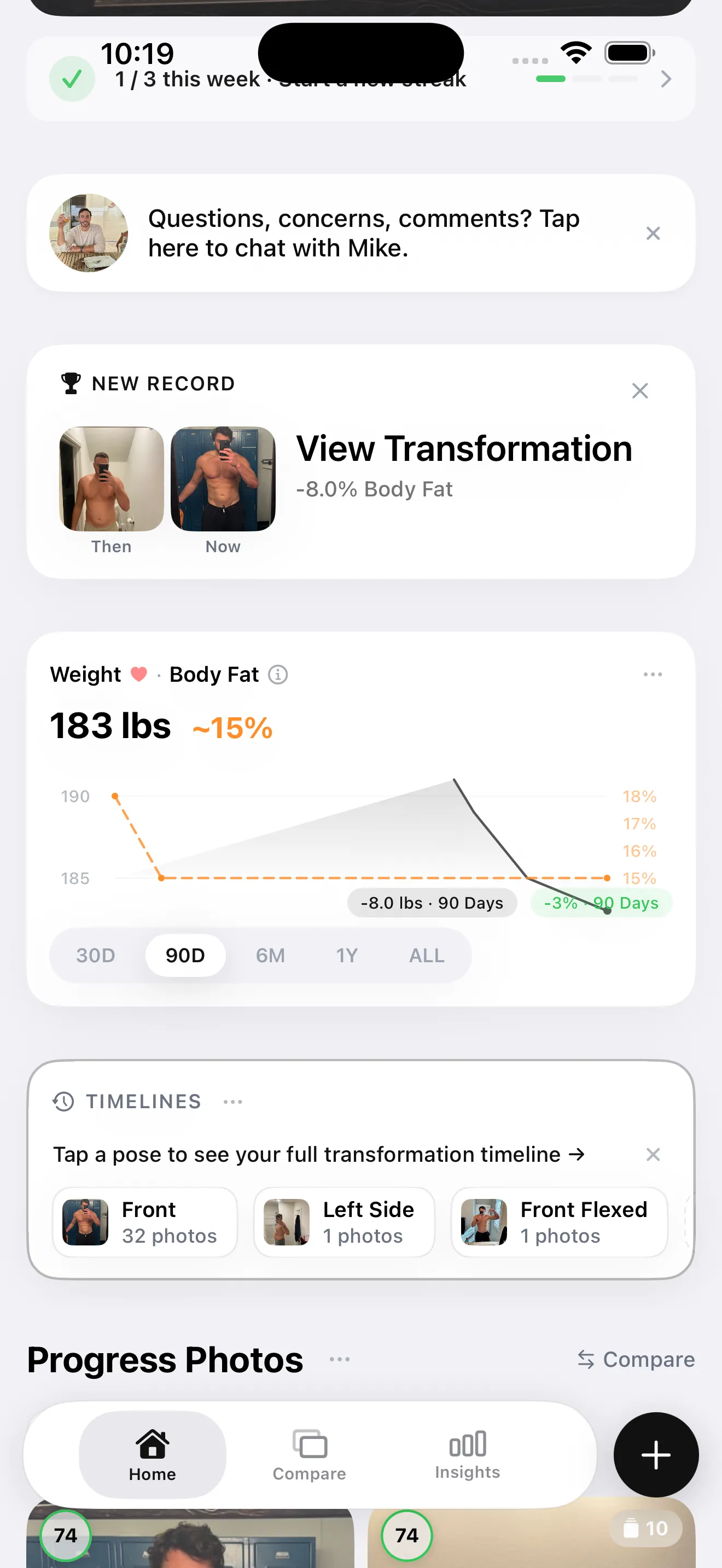
An estimate history can support a broader progress record. It cannot mark a percentage at which your jawline must appear.
How long can jawline changes take?
A body-fat estimate cannot be converted into a reliable jawline deadline. Even if your weight changes steadily, the visible effect on your face may be subtle, uneven or different from what you expected.
Set review dates for your overall routine instead of a deadline for a facial feature. If you compare photographs every few weeks, keep the conditions consistent and look across several comparisons. A single flattering or unflattering photo is weak evidence of a trend.
Can jaw or neck exercises create a sharper jawline?
A change in muscle size or posture can alter the surrounding outline. That does not establish that face exercises selectively remove fat or reshape an adult jawbone. A face-shape label cannot establish an individual training prescription.
Keep exercise goals focused on strength and comfortable movement. If you have jaw pain, clicking or chewing difficulties, discuss those symptoms with a dentist rather than adding resistance or prolonged chewing to chase a photo effect.
What else should you know about body fat and jawline definition?
Can you spot-reduce face fat?
Face exercises do not give you control over where your body loses fat. Facial appearance also reflects bone structure, soft tissue and photo conditions. If overall fat loss is appropriate for you, facial changes may accompany it, but their extent and timing are individual. A jawline photo cannot tell you how much fat to lose.
My abs are showing but my jaw is still soft, is that normal?
Yes, visible abdominal definition and a softer jaw can coexist. Different areas of your body have different underlying structures and fat distribution. Neither feature identifies an exact body-fat percentage. A softer jaw alone does not establish that you need to lose more weight, and further weight loss cannot guarantee the shape you want.
Does gaining muscle in the neck help jawline definition?
Neck development can change the overall proportions around your face, but it cannot determine your jawbone shape or selectively remove facial fat. Keep training goals focused on strength and comfortable movement. A change in neck size or camera angle can alter the outline in a photo without showing a change in facial fat.
What's the lowest body fat % I should go for jaw definition?
There is no evidence-based minimum percentage that everyone should pursue for a sharper jaw. Aesthetic preferences do not establish a safe personal weight or body-fat target. If further weight loss is affecting your energy, recovery or relationship with food, discuss your goals with a qualified clinician or dietitian rather than using your jawline as the deciding measure.
How long until I see my jawline if I start cutting now?
A starting body-fat estimate cannot predict a jawline deadline. Your facial structure, fat distribution and amount of change all influence what you may notice. Compare photos taken under matching conditions several weeks apart, and assess broader progress alongside them. A different facial outline is possible, but a particular shape or completion date is never guaranteed.
What should you do with your next progress photo?
First, repeat your camera setup. Second, compare it with an older photo taken under similar conditions. Third, consider your overall progress and wellbeing before changing your routine. Facial shape alone is too limited a signal to prescribe a cut.
Keep your progress photos together
GainFrame stores your photo timeline and provides body-fat estimates from body photos. Compare dates side by side while keeping the limits of photo estimates in view. Available on iPhone.
Download GainFrame Free