
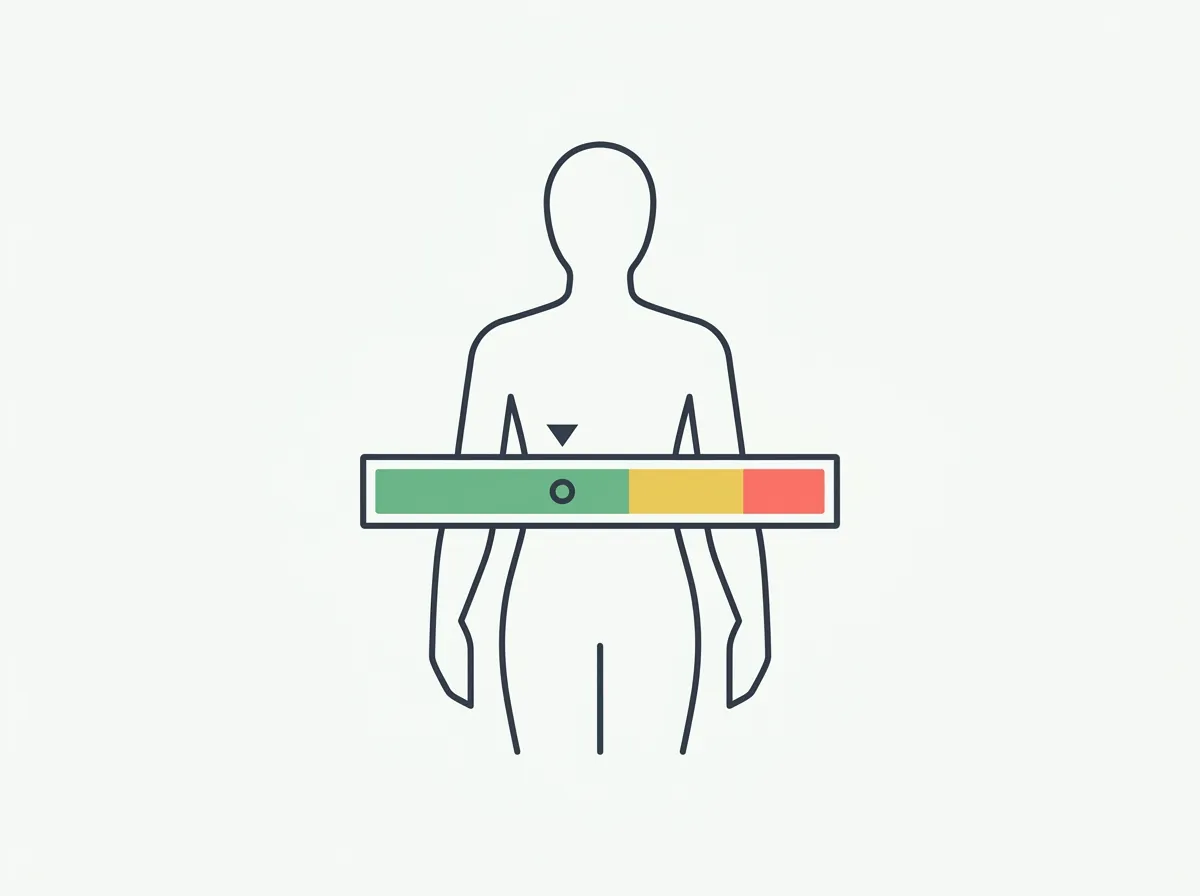
Quick answer: A visceral fat rating is a device-specific estimate. Tanita classifies ratings from 1 to 12 as healthy and 13 to 59 as excessive. Check your own device guidance and compare readings under consistent conditions. Progress photos show external changes; they cannot measure visceral fat or confirm a change in internal fat.
Your scale displays a visceral fat level of 8, 14, or 3. Before interpreting it, find the device name and the explanation in its manual. The number has meaning within that manufacturer's system; it does not come with a universal clinical range.
This guide explains Tanita's published categories, what a home reading can tell you, and which changes a photograph can record.
Where does a visceral fat rating come from?
Visceral fat sits inside the abdomen around internal organs. A consumer bioelectrical impedance scale estimates body composition from an electrical measurement and information about you. Its visceral fat rating is an algorithmic estimate of an internal fat depot.
Tanita's explanation of its rating explicitly distinguishes that estimate from direct measurement. A scale does not produce an image of your abdominal organs. Even when the display looks precise, the result inherits the limitations of the device and its prediction method.
A rating, a body fat percentage, and an imaging report's fat area are different outputs. Keep the unit and the method attached to any number you record. Our guide to visceral fat tests explains the distinction between home estimates and clinical assessment.
What do Tanita's visceral fat levels mean?
Tanita publishes two categories for its 1 to 59 rating scale. Use this table only when your device documentation identifies that scale.
| Tanita rating | Manufacturer classification | How to read it |
|---|---|---|
| 1 to 12 | Healthy | Within Tanita's stated healthy rating range. This category does not rule out other health concerns. |
| 13 to 59 | Excessive | Above Tanita's stated healthy rating range. Review the device guidance and discuss persistent concerns with a clinician. |
These are Tanita's published categories, checked October 9, 2026. The company does not provide the extra low, moderate, borderline, and very-high subdivisions sometimes added to online charts.
For example, a Tanita rating of 8 falls in its healthy category, and 14 falls in its excessive category. Neither value establishes a diagnosis or tells you your individual cardiovascular risk. A rating within the healthy band also cannot replace an assessment of blood pressure, blood tests, medical history, and other relevant factors.
Can you compare the number across different scales?
Check each manufacturer's manual before comparing readings. Devices can use different algorithms, units, and category boundaries. An index on one scale and an area expressed in square centimeters on another report cannot be treated as interchangeable.
Avoid converting a home rating into a supposedly measured CT or MRI fat area. A manufacturer's calibration relationship does not turn your individual home estimate into an imaging result. If you change devices, record the switch and establish a new baseline under the new device's instructions.
Why can the reading change between measurements?
Measurement conditions can affect bioelectrical impedance results. Tanita's guidance on accurate readings discusses factors such as meals, exercise, and hydration. Follow the instructions for your particular model when choosing a measurement time.
There is no universal rule that dehydration adds exactly two levels or that exercise adds one level. A one-day change alone cannot establish how much internal fat changed. It also cannot tell you that a lifestyle change succeeded or failed.
Keep the comparison consistent: Use the same device and profile, follow its timing instructions, and note unusual conditions such as recent exercise. Review repeated readings with their context instead of treating every movement as a biological change.
If results look implausible, check setup and manufacturer troubleshooting guidance. Persistent unexpected readings are a reason to seek help interpreting the result. Repeating a measurement under consistent conditions can improve comparability, but it does not eliminate the method's limitations.
How is visceral fat different from total body fat?
Body fat percentage describes the estimated share of total body weight that is fat. Visceral fat describes fat in a particular location inside the abdomen. Fat under the skin contributes to the body's visible outline; a photo cannot separate the internal depot from other tissue.
Cleveland Clinic's visceral fat guide explains the distinction between abdominal visceral fat and subcutaneous fat. A smaller-looking waist can be a useful external observation, but it cannot quantify the amount of visceral fat lost.
For the same reason, a lean appearance does not certify internal health. Keep visual changes, scale estimates, and clinical findings as separate observations when discussing progress.
Can progress photos show a change in visceral fat?
Photos can document your appearance, clothing fit, posture, and visible changes over time. They cannot see inside the abdominal cavity. Lighting, camera distance, posing, and clothing also affect the comparison.
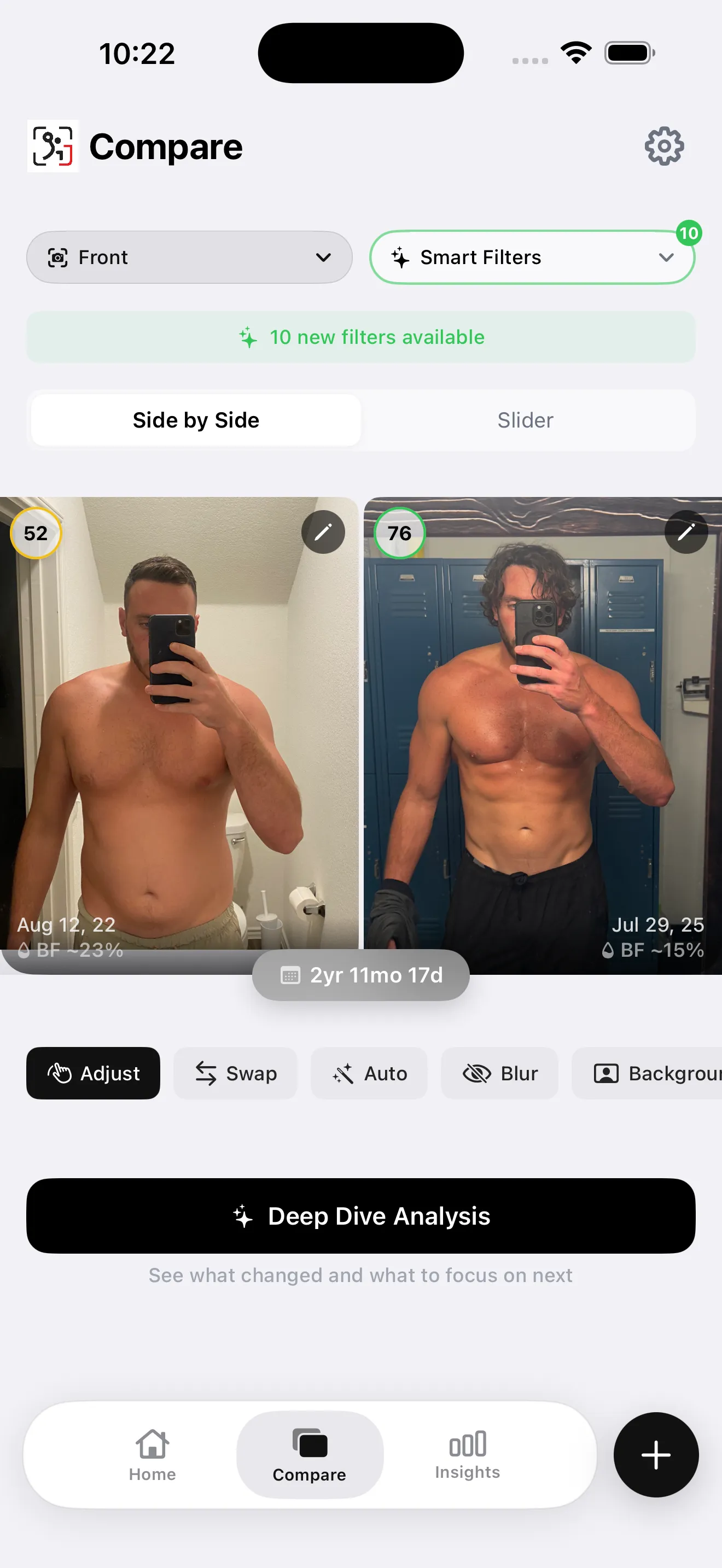
A photo comparison records visible appearance. It cannot measure internal fat or confirm that a visceral fat rating is accurate.
You can use the progress photo comparison tool to view external changes with similar framing. GainFrame also provides a place to keep photo check-ins together. Treat that record as visual context alongside other information, with no promise that a visible change proves visceral fat loss.
What can you do about a concerning result?
Start by checking that you are reading the correct manufacturer's scale. Bring repeated results and the device name to a clinician if the rating stays elevated or you are concerned about your health. They can interpret the reading alongside your history and decide whether other assessment is useful.
General approaches discussed by Cleveland Clinic include regular activity, balanced eating, adequate sleep, and managing stress. The appropriate plan depends on your circumstances. A consumer rating cannot prescribe a calorie target, a particular workout, or a deadline for a specific reduction.
Before your next comparison:
- Check the rating scale and categories in your device manual.
- Follow the same measurement instructions each time.
- Record the date and any unusual conditions.
- Bring persistent concerns to a clinician with that context.
What else should you know?
What does my device’s visceral fat rating mean?
It is an estimate interpreted using that device's own scale and guidance. Tanita labels ratings from 1 to 12 healthy and 13 to 59 excessive. Confirm the manufacturer and model before using those categories, and remember that a home rating cannot establish a diagnosis or your overall health risk.
Is the same number comparable across brands?
Do not assume that identical numbers have the same meaning across brands. Devices may use different algorithms, units, and reference ranges. Check both manuals before comparing them. If you switch devices, note the change in your record and establish a new baseline using the new manufacturer's measurement instructions.
Does a smart scale directly measure visceral fat?
A consumer bioelectrical impedance scale estimates visceral fat using electrical measurements and its prediction method. It does not image fat around your organs. The displayed rating should be interpreted within the device's limitations; a clinician can advise whether your circumstances call for a different kind of assessment.
Can progress photos measure visceral fat?
No. Progress photos record external appearance and cannot see the fat inside your abdominal cavity. Changes in lighting, posture, clothing, and subcutaneous fat can alter how your waist looks. Use consistent photos to document visible changes, while keeping any conclusions about visceral fat separate from the image comparison.
When should I discuss a result with a clinician?
Discuss a persistently elevated rating, an unexplained change, or concerns about your metabolic health with a clinician. Bring the device name and readings with their measurement conditions. They can consider those estimates alongside your history and other findings, and decide whether further assessment is appropriate for you.
Keep a visual record of your progress
Progress photos document external changes. They do not measure visceral fat or replace a clinical assessment.
Download GainFrame Free