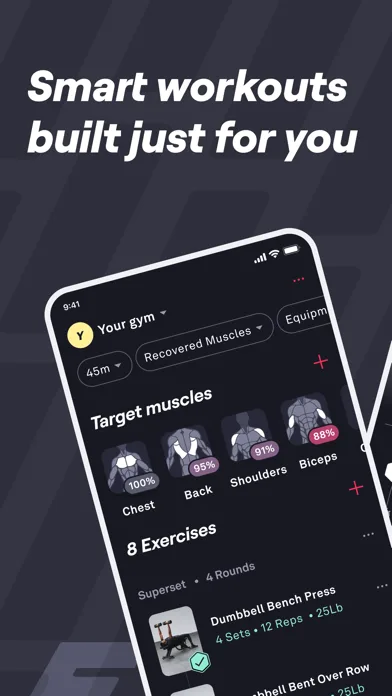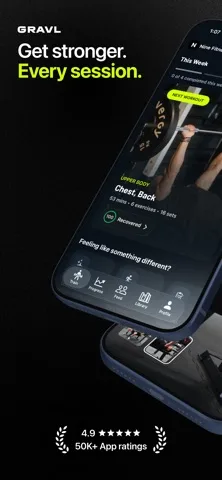
Here's the thing about most "best AI personal trainer" listicles: the publisher is one of the apps in the list. Ray, Fitbod, and FitnessAI all run their own SEO blog posts ranking themselves at #1 — which is exactly the right move for them and exactly the wrong source for you.
This list is different because we're not in the workout-planner business. GainFrame is a body composition tracker. We don't write your routine, we don't sell you sets and reps, and we don't compete with any of the apps below. The only app we have a stake in is the one at the end — the one you install after the workout to find out whether it actually built any muscle.
Eight AI personal trainers, ranked honestly. All of them are legitimate. Pick the one that fits how you actually train — and then read the last section, because every list like this leaves out the most important question.
Why AI personal trainer apps exist now
For decades, the only way to get a real personal trainer was to pay one. Eighty to two hundred dollars an hour for someone to stand in the gym, write your program, watch your form, and adjust on the fly. Most people who could benefit from a trainer never hired one — the price gated the entire category.
What changed: vision models can now watch your reps, large language models can write a periodized program from a one-paragraph prompt, and voice models can talk to you mid-set in real time. Twenty dollars a month buys you a coach that does at least 60% of what a $150/hr trainer used to do. For most people, that's enough.
The category has split into two camps:
Pure AI trainers. Ray, Fitbod, FitnessAI, Flex AI, GymStreak, BodBot. No human in the loop. The algorithm writes your program, adapts it based on your performance, and (in some cases) coaches you in real time. Cost: $10–$20/mo.
AI + human hybrids. Future, Trainiac. A real human coach pairs with AI tooling to deliver a program at scale. The coach handles the judgment calls and accountability; AI handles the routine programming and tracking. Cost: $80–$150/mo.
Both camps are legitimate. The right one depends on whether you trust an algorithm to design your training, or whether you need a human texting you on Sunday night to hold you accountable.
What "AI" actually does (and doesn't do) in these apps
Before the rankings, it's worth being honest about what the AI in these apps is actually good at — and what it can't do, no matter how the marketing reads.
What AI does well:
- Workout programming. Periodization, set/rep schemes, progressive overload, deload weeks. This is well-solved by algorithms trained on millions of workouts.
- Exercise selection and substitution. "I don't have a barbell" or "my shoulder hurts on overhead press" — AI handles swap-out logic instantly.
- Voice coaching during a session. Modern conversational models can call out your next set, time your rest, and respond to "make this heavier."
- Computer-vision form check. Bar path drift, knee cave on squats, hip hinge form on deadlifts. The vision models are real and they're useful.
What AI doesn't do:
- Know how you slept last night, what your stress levels look like, or whether you're fighting off a cold.
- Know if you're injured in a way you haven't told it about — a tweaky low back, a dodgy elbow.
- Know if your nutrition is on point, your protein is adequate, or your sleep is supporting recovery.
- Know if your body is actually changing. This is the big one. The AI tells you what to do. It cannot tell you whether what you did is producing the result you want.
That last point is what most listicles skip — and it's where the eighth app in this list comes in.
The 8 AI personal trainer apps, ranked
1. Ray — $19.99/mo, iOS
AI: Real-time conversational voice coaching, computer-vision rep counting, instant form feedback
Best for: People who want a "trainer in the gym with you" feel
Ray is the only app in this list that genuinely feels like a trainer is in the gym with you. You set the phone up, start a workout, and Ray talks to you — calling out the next set, counting reps via computer vision, flagging form issues, and responding when you say things like "this feels too light" or "I need more rest." It's the closest thing to a real-time conversational AI coach that exists right now.
The voice interaction is what justifies the $20/mo price tag. If you're doing solo gym sessions and find yourself zoning out between sets or losing track of what's next, having a coach speak to you changes the experience completely. Rep counting via vision is accurate enough to be useful — it'll tell you you did 7 instead of the planned 8 and adjust the next set.
The downside: Ray's programming layer is less mature than Fitbod's. The plans are good but not as adaptive to long-term progression. And it's iOS only. If you train alone and want the in-session presence, Ray is the pick. If you want the algorithm to be the deepest piece, look at Fitbod or FitnessAI.
Best for: Solo lifters who want a real-time conversational coach in the gym, not just a routine on a screen.
2. Fitbod — $9.99/mo, iOS/Android
AI: Workout planning algorithm trained on millions of completed workouts
Best for: Experienced lifters who need programming guidance
Fitbod's strength is the planner. The algorithm has been trained on hundreds of millions of completed sets across years of user data, and it shows: progressive overload calls feel right, recovery-aware exercise selection actually accounts for what you trained two days ago, and equipment substitution is smooth. Tell it you have a power rack, dumbbells, and a cable machine; it'll write you a program around what you have.
What Fitbod isn't: a real-time coach. There's no voice. There's no form check. You log your sets manually (or via Apple Watch / Hevy integration). The app is a routine generator with strong adherence tools, not a session companion.
For experienced lifters who already know how to execute a set and just want the programming taken off their plate, Fitbod is probably the highest-value option in this list. $10/mo is the right price, the cross-platform availability is a real win, and the routine quality is consistently good.
Best for: Experienced lifters who want algorithm-driven programming and don't need real-time coaching during the workout.
3. FitnessAI — $89.99/yr, iOS
AI: Workout algorithm based on 5.9M completed workouts, BodyScan companion app
Best for: Lifters who want planning + body comp in one ecosystem
FitnessAI was one of the first AI workout planners to get serious adoption — they've been generating routines from lifting history since 2019. The pitch is the dataset: 5.9 million workouts inform the programming logic, which makes the rep/weight progressions feel grounded rather than guessed.
What separates FitnessAI from Fitbod is the BodyScan companion app. FitnessAI users can add a body-tracking layer that scans physique progress alongside the workout data. The integration is the value — your training data and your physique data live in the same ecosystem rather than in two unrelated apps.
The trade-off: BodyScan's accuracy claims aren't backed by published DEXA validation, and the body comp output is shallower than what dedicated trackers offer. If you're picking FitnessAI primarily for the planner, it competes well with Fitbod. If you're picking it for the BodyScan companion, you'd get more accurate body data from a standalone tracker.
Best for: Lifters who want a planner backed by a large training dataset and prefer everything to live in one ecosystem.
4. Flex AI — Subscription, iOS
AI: Form analysis combined with adaptive programming
Best for: Lifters who want form coaching alongside programming
Flex AI sits in the middle ground between pure planners (Fitbod) and real-time coaches (Ray). The app generates an adaptive routine, but the differentiator is the form analysis layer — point your phone at yourself during a set and Flex will flag form breakdown after the fact, rather than guessing what you did from log data.
For solo lifters who don't have a coach watching them and want programming plus a form-check safety net, Flex AI is a reasonable single-app pick. The form analysis isn't as conversational as Ray's real-time coaching, but it's more focused than Fitbod's pure-programming approach.
Where it doesn't quite win: it doesn't have the depth of programming that Fitbod offers, nor the in-the-moment voice presence of Ray. It's a credible compromise between the two camps without being best-in-class at either.
Best for: Solo lifters who want a planner plus form check in one app and don't need a fully conversational coach.
5. GymStreak — Subscription, iOS/Android
AI: Dynamic workout plans that adapt to performance
Best for: People who want "set it and forget it" weekly programs
GymStreak's pitch is simplicity. Tell it your goals, your equipment, and how many days a week you want to train, and it generates a weekly program that adapts based on what you logged. The interface is opinionated and clean — fewer knobs than Fitbod, less customization, but a lower decision-making burden when you walk into the gym.
If you're the kind of person who finds Fitbod's options overwhelming and just wants a routine to follow without thinking, GymStreak's design is built for you. The AI adaptation isn't as deep as the more data-heavy planners, but it's enough to keep the program fresh and progressive over weeks and months.
Cross-platform availability (iOS and Android both) is a real plus for non-iPhone users — most of the apps in this list are iOS-only.
Best for: Lifters who want a simple weekly program that adapts in the background without manual configuration.
6. BodBot — Freemium, iOS/Android/web
AI: Hyper-personalized workouts based on goals, equipment, fitness level, schedule
Best for: Budget-conscious users and Android lifters
BodBot is the pick if you don't want to pay a subscription. The free tier is genuinely usable — you get adaptive workout generation across a real exercise library, and the personalization layer accounts for fitness level, available equipment, and weekly schedule. The premium tier unlocks deeper customization, but most people can run on free for a long time.
BodBot also runs on iOS, Android, and the web — making it the most cross-platform option in this list. If you train across devices or just want the routine accessible from a browser, that flexibility is rare in this category.
The trade-off is polish. The interface feels less refined than Fitbod or Ray, and the adaptation logic is less sophisticated than the data-heavy planners. If your priority is "free, works on Android, gets me a routine," BodBot is the answer. If your priority is the smoothest experience or the deepest programming, you'll probably end up paying for one of the others.
Best for: Lifters who want a free or low-cost AI trainer, especially Android users.
7. Future — $149+/mo, iOS
Model: Pure-AI is the wrong category here — Future pairs you with a HUMAN coach, AI-augmented
Best for: People who want accountability + customization but can't afford a $300/mo personal trainer
Future is the hybrid. You get matched with a real human coach who writes your program, watches your videos, sends you check-ins, and adjusts your routine week to week. The AI piece is in the tooling the coach uses — pulling your wearable data, building progression templates, surfacing patterns in what you completed. But the relationship is with the human, not the algorithm.
$149+/mo is more expensive than any pure-AI app in this list, but it's a fraction of what an in-person trainer costs. If you've tried pure-AI apps and bounced because nothing held you accountable on the days you didn't feel like training — the human texting you matters more than the algorithm. That's what Future actually sells.
Where it doesn't fit: if you're confident in your training and just want a routine generator, paying $150/mo for accountability you don't need is overkill. The pure-AI apps will do the routine work for $10–$20.
Best for: People who need accountability and human judgment, not just programming, and can justify $150/mo.
8. Trainiac — $79+/mo, iOS
Model: Similar to Future — human coach + AI assist
Best for: People who don't trust pure-AI plans yet
Trainiac is in the same hybrid category as Future, at roughly half the price. You get a real human coach, AI-augmented tooling, and weekly check-ins. The price difference reflects the level of personalization and the depth of the coach relationship — Future tends to feel more premium; Trainiac is more accessible for people who want a coach but balk at $150/mo.
For people who don't fully trust algorithmic programming yet — first-time lifters who want a human signing off on their plan, or older lifters who want more conservative judgment around joint health — Trainiac is a credible step up from a pure-AI app without the Future price tag.
If you're already comfortable executing your own training and the coach relationship would feel like overkill, the pure-AI apps will save you $60+ per month for similar programming quality.
Best for: Lifters who want a real human coach with AI assist at a more accessible price than Future.
Comparison table
| App | Price | AI Style | Real-Time Coaching | Body Comp Built-In? | Best For |
|---|---|---|---|---|---|
| Ray | $19.99/mo (iOS) | Conversational voice + vision | Yes (voice + rep count) | No | Real-time coach in the gym |
| Fitbod | $9.99/mo (iOS/Android) | Algorithmic planner | No | No | Algorithm-driven programming |
| FitnessAI | $89.99/yr (iOS) | Algorithm + BodyScan | No | Companion app | Planner + scanning ecosystem |
| Flex AI | Subscription (iOS) | Form analysis + planner | Form check (post-set) | No | Programming + form coaching |
| GymStreak | Subscription (iOS/Android) | Adaptive weekly plans | No | No | Set-and-forget weekly programs |
| BodBot | Freemium (iOS/Android/web) | Personalized planner | No | No | Free / Android lifters |
| Future | $149+/mo (iOS) | Human coach + AI assist | Async (coach reviews videos) | No | Accountability + customization |
| Trainiac | $79+/mo (iOS) | Human coach + AI assist | Async (coach reviews videos) | No | Hybrid coaching, lower price |
The missing piece: how to know your AI trainer is actually working
Every app above will tell you what to do. None of them will tell you whether what you did actually built any muscle.
Think about that for a second. You're paying $10 to $150 a month for a routine, and the routine is judged entirely by whether you completed it — not by whether it produced the result you wanted. The validation question is offloaded to you, and most lifters never actually answer it. They follow the plan, hit the lifts, the AI calls it a successful week, and twelve weeks later they have no idea if their physique actually changed.
This is the hole every AI personal trainer leaves behind:
- An AI plan that feels right may be wrecking you. You're hitting your sets, but you're under-recovered, your sleep is poor, and you're slowly losing lean mass under the weight gain. The plan looks like it's working because the lifts are going up. The body says otherwise.
- An AI plan that feels easy may be exactly right. You're well-recovered, your strength is climbing without the grind, and your composition is moving in the right direction. But because the sessions feel light, you (or the algorithm) start adding volume to "make it harder" — and crash a few weeks later.
- The only way to distinguish between these scenarios is to track outcomes — strength and body composition — over a meaningful window. Three to four weeks minimum.

The muscle group breakdown above is the data your AI trainer doesn't have. It can write you the perfect chest-and-back day, but it has no signal on whether your chest is actually developing — whether the routine is hitting it, whether you're recovering enough to grow, or whether you're stalling because your back is dominating the pulls.

The side-by-side compare is the answer to "did the last twelve weeks work?" Not "did I complete the plan?" — that's a different question, and it's the only one your trainer is set up to answer.
The complete stack: trainer + tracker
The honest answer for most serious lifters is that you need two apps:
One AI trainer from the eight above, picked based on how you train (real-time coach? algorithmic planner? human + AI?).
One body composition tracker that validates whether the trainer's plan is actually working. GainFrame fits this slot specifically because it doesn't compete with any of the trainers in this list — no workout plan, no programming, no routine generation. It's a check-in tool that tells you what your body is actually doing.
Why GainFrame works as the validation layer:
- Doesn't compete with any of the 8 trainers above. No routine, no programming. Pair it with whichever AI coach you picked.
- Tracks BF%, lean mass, FFMI, and individual scores for 12 muscle groups from photos. Not just "your body fat is X%" — chest, back, shoulders, arms, abs, legs, glutes, all scored individually.
- DEXA-validated to ±0.4% on a published comparison against a clinical scan. Most apps in this category make accuracy claims without showing the data.
- $0 base price. The free tier covers core analysis and check-ins. Pro is optional.
The point isn't that GainFrame replaces your AI trainer. The point is that your AI trainer is incomplete on its own — it tells you what to do but can't tell you whether you got the result. The validation layer has to come from somewhere, and right now it's missing from the entire AI personal trainer category.
Decision matrix: which AI trainer fits which lifter
Match the AI trainer to how you actually want to train. There's no single best app — there's a best app for you.
Want a real trainer feel in the gym: Ray. The conversational voice coach changes the in-session experience.
Want algorithm-driven programming: Fitbod. Best-in-class routine quality at $10/mo.
Want planning + scanning in one ecosystem: FitnessAI. Pair the planner with the BodyScan companion if you want everything in one account.
Want form coaching alongside the routine: Flex AI. Programming plus a form-check safety net.
Want set-and-forget weekly plans: GymStreak. Lower decision-making overhead than Fitbod.
Want freemium / Android: BodBot. The only credible free option that runs on iOS, Android, and the web.
Want human + AI hybrid (premium): Future. Real coach with AI tooling, $150/mo.
Want human + AI hybrid (more accessible): Trainiac. Same model as Future at roughly half the price.
Then, regardless of which trainer you pick, layer in body composition tracking so you can answer the validation question your trainer can't.
Already using an AI trainer? Here's how to know it's working.
Your AI trainer writes the routine. GainFrame tells you whether the routine is actually building muscle. Body fat %, lean mass, FFMI, and individual scores for 12 muscle groups after every check-in. DEXA-validated within 0.4%. Free on iPhone — no subscription required to use it as the validation layer for whichever AI coach you picked.
Download GainFrame Free